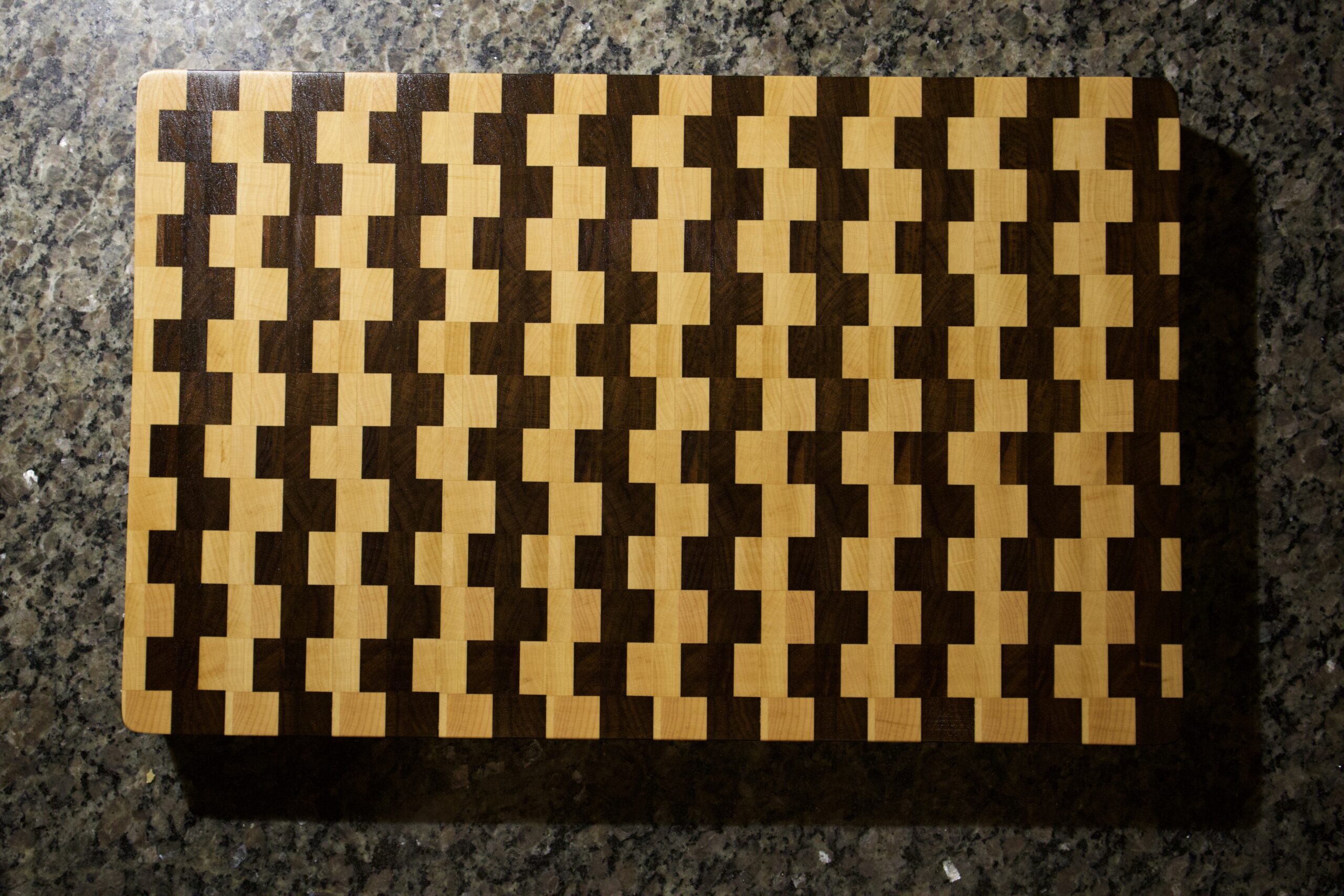
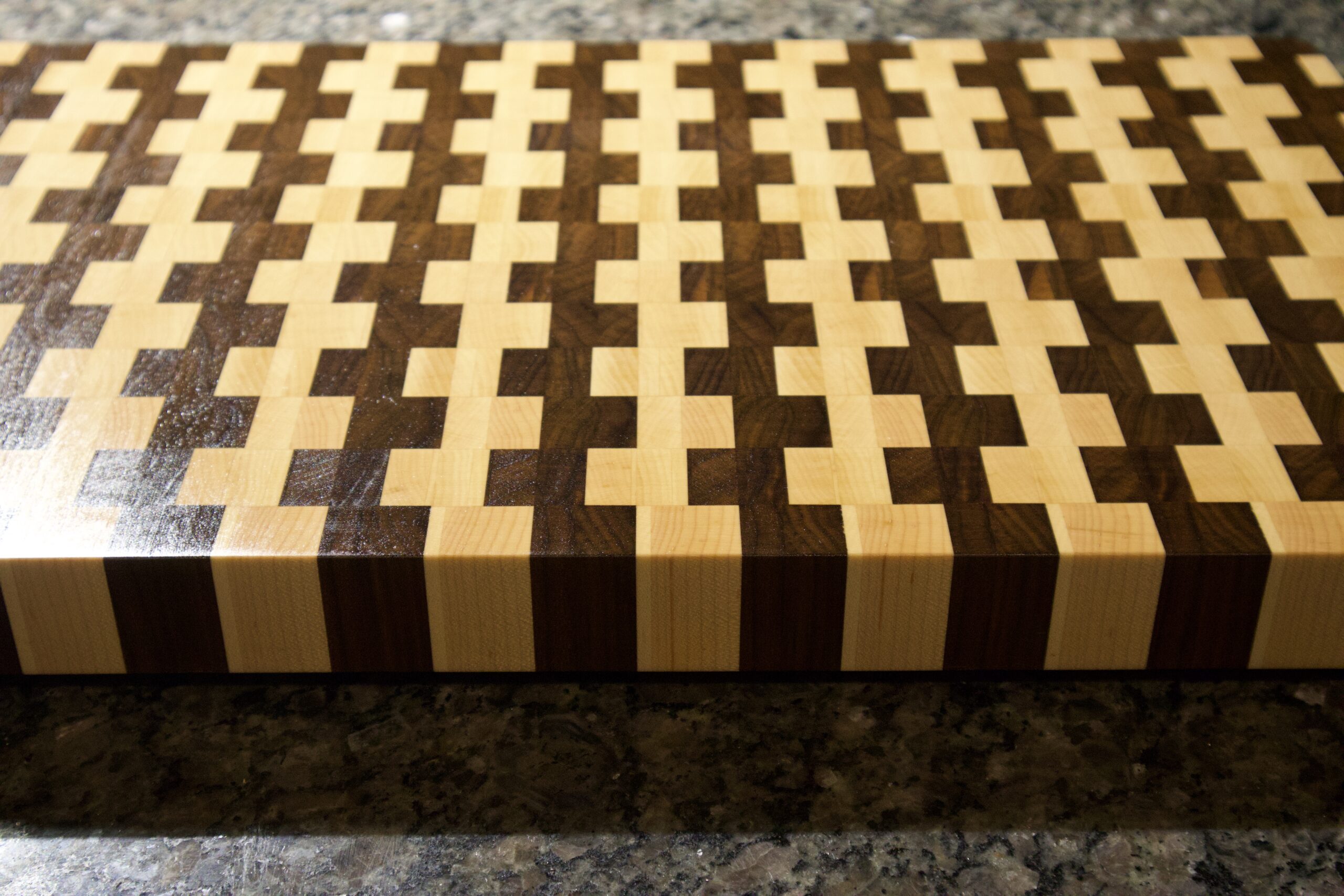
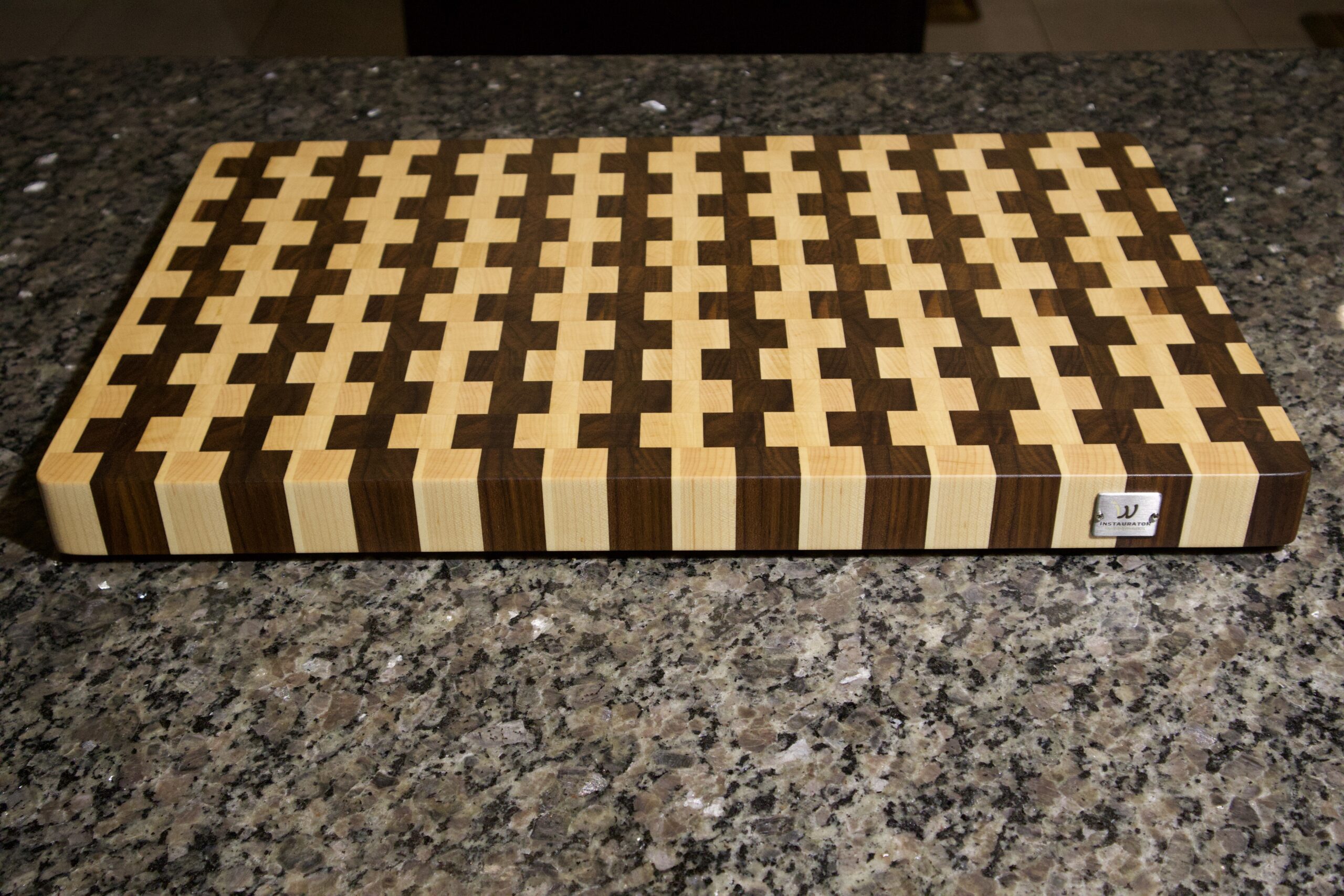
Altered Tile, can I do this?
By Sean Cooper
February 22, 2025
During a recent visit to San Francisco’s Palace of Fine Arts, I encountered a mesmerizing tile pattern in an unexpected place: the restroom. This design featured perfectly square tiles arranged in alternating black and cream rows, with each row offset by half a tile. The result was an optical illusion where the tiles seemed to taper and shift, creating a dynamic visual effect. While writing this post I learned that this phenomenon is known as the Café Wall illusion, where parallel lines between staggered rows of contrasting tiles appear to converge or diverge, distorting perception.
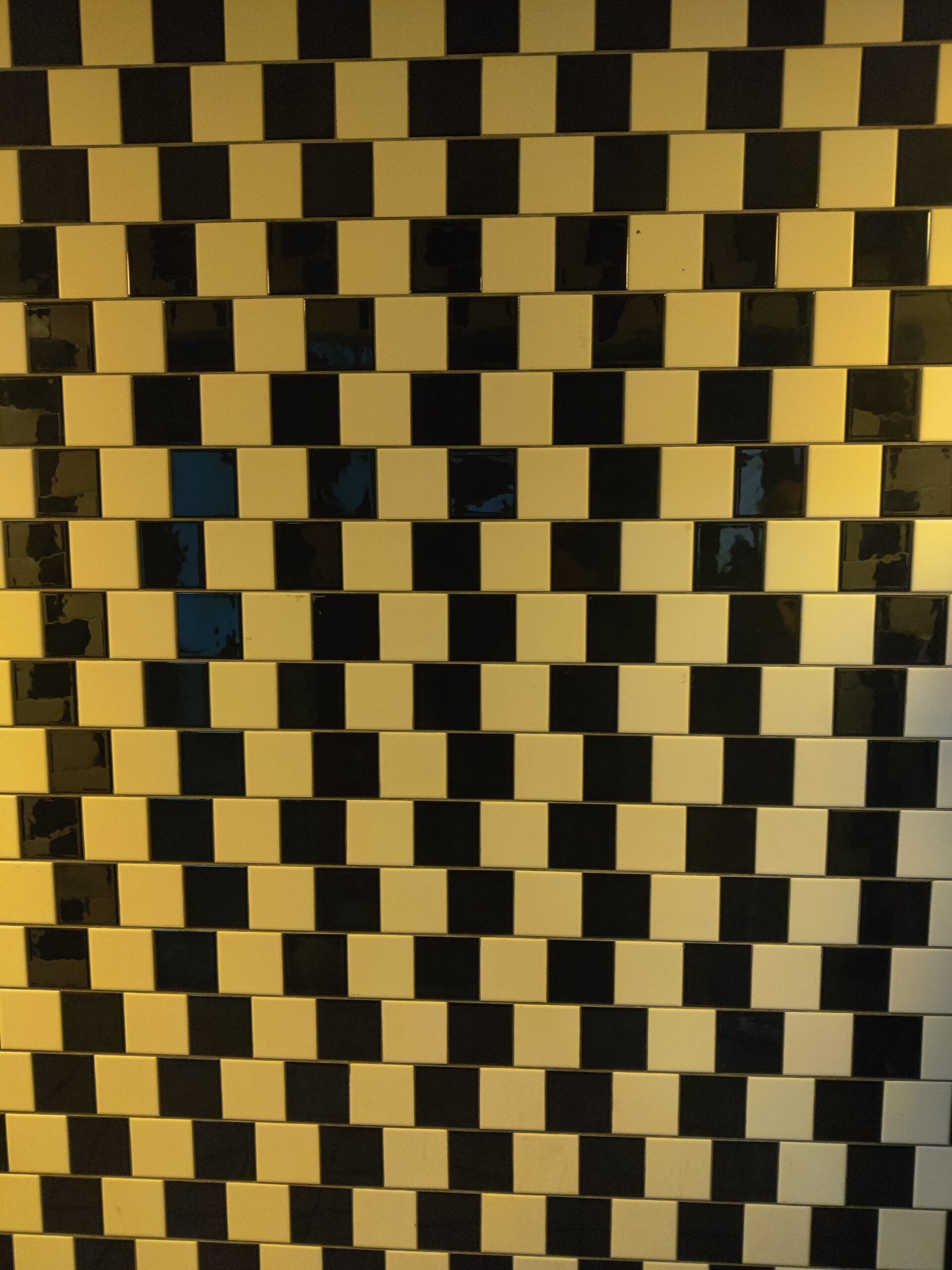
Inspiration smacked me upside the head by this bathroom tile
Inspired by this captivating pattern, I immediately wondered how I could capture it into an end grain cutting board design—a project I personally hadn’t seen in an end grain board before. It would be months before I would attempt it.
I don't use CAD software to design my boards at this stage. One of these days I will as I'm certain it will help me improve my efficiency and it would be helpful to have plans to reference should I want to recreate an old design.
Armed with my trusty pencil and graph paper, I sketched various mock-ups, considering the capabilities of my equipment and the intricacies of the pattern. The challenge lay in conveying the visual illusion while ensuring the board’s structural integrity and durability.
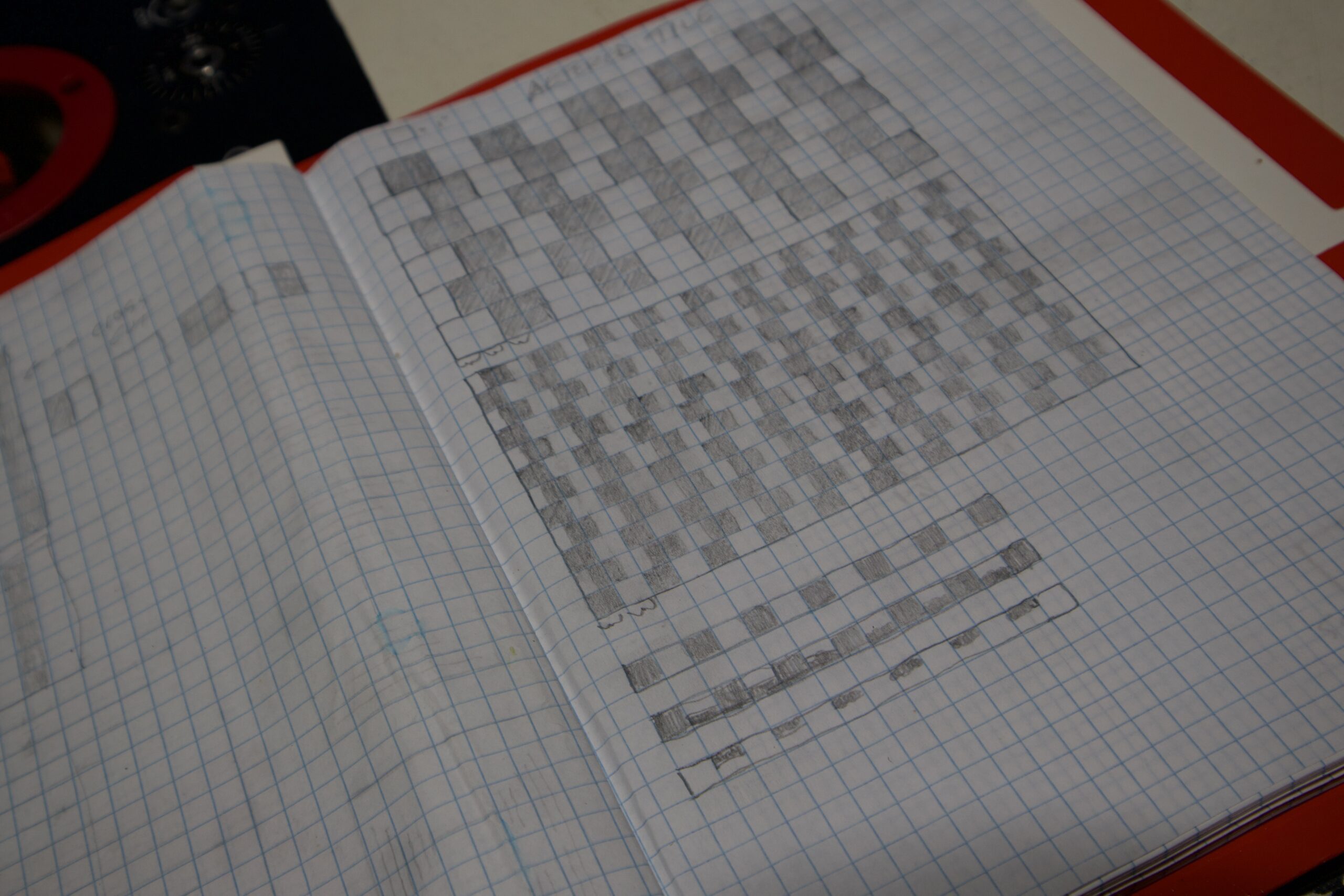
I went with the second sketch thinking the board having more rows and tiles would better produce the effect I was trying to mimic
After uncertainty throughout planning the design, I decided to just get started on making the “Altered Tile” cutting board. Selecting the contrasting woods to mimic the black and cream tiles was made simple with my experience using hard maple and black walnut. They are comparable in janka hardness and their grain density is ideal for end grain cutting boards.
At this point I think I will need two panels, one with alternating solid walnut strips and alternating half walnut half hard maple strips, and the other with alternating solid hard maple strips and alternating half walnut half hard maple strips.
The first hurdle to ensure the pattern’s accuracy is to make each "tile" strip exactly square in the finished panels. I went with 1" x 1" as the final dimension for each "tile" and worked backward from that.
Step 1 was to glue 5/8" hard maple and walnut strips together that were both wider than 1". Once these were glued together I ran them through the planer to get their width down to 1". Their thickness was over 1" at this point.
Next I made solid hard maple and black walnut panels then ripped 1+" strips and planed their width down to 1".
With these strips I assembled the alternating strips, glued them together, then meticulously ran those panels through the planer to get the thickness of the panels down to 1" while carefully ensuring the half maple and half walnut pieces were exactly 1/2" within the panel.

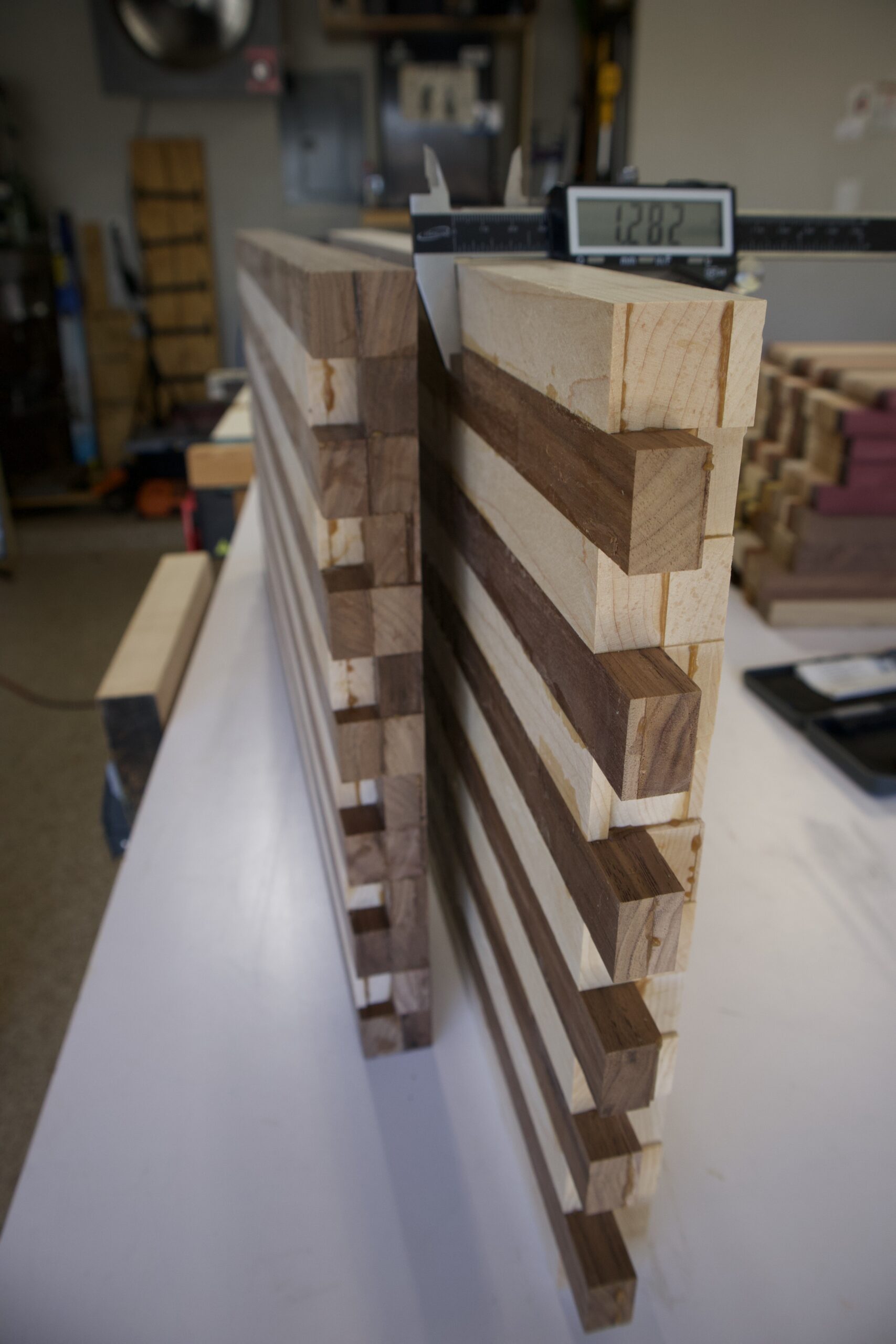
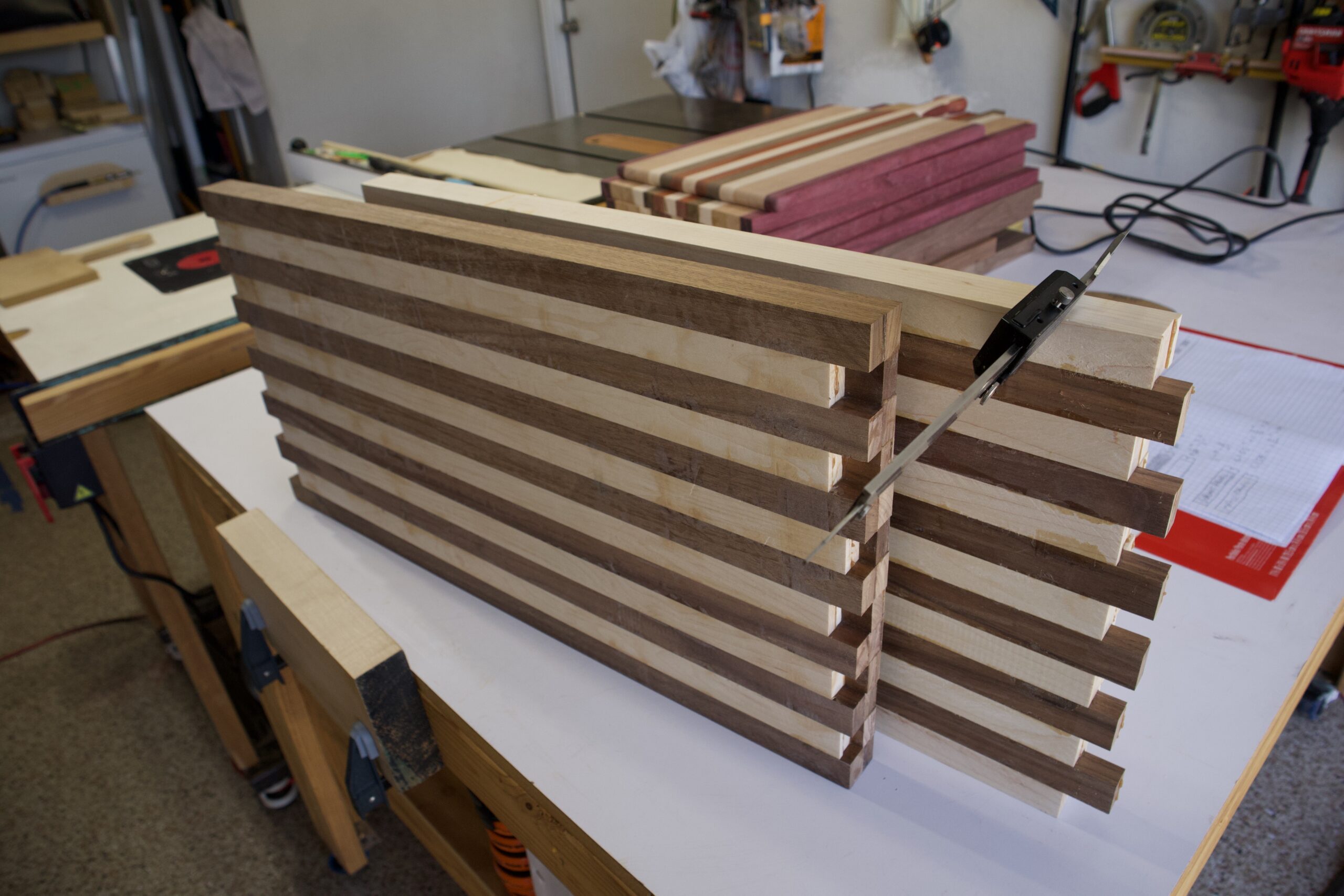
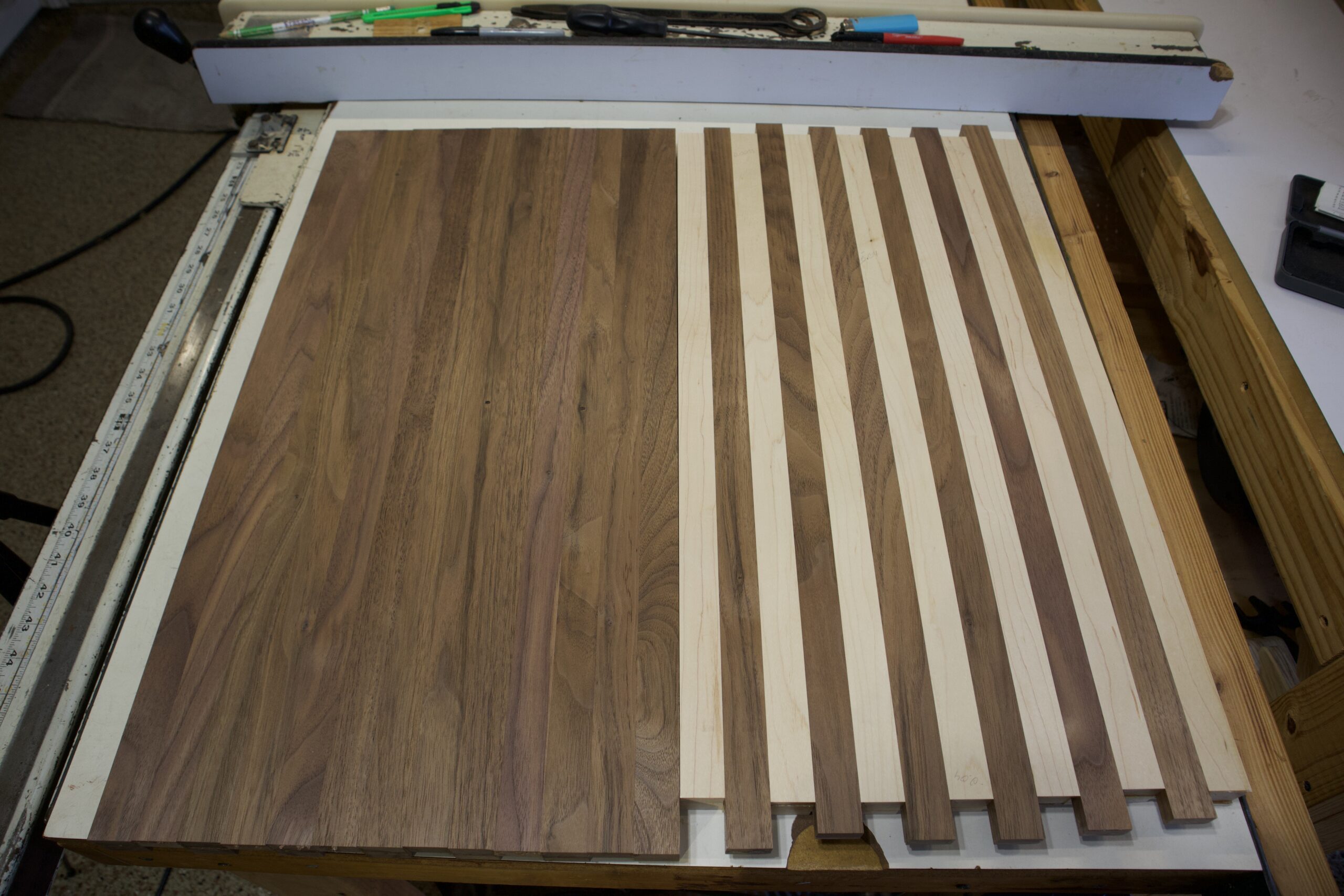
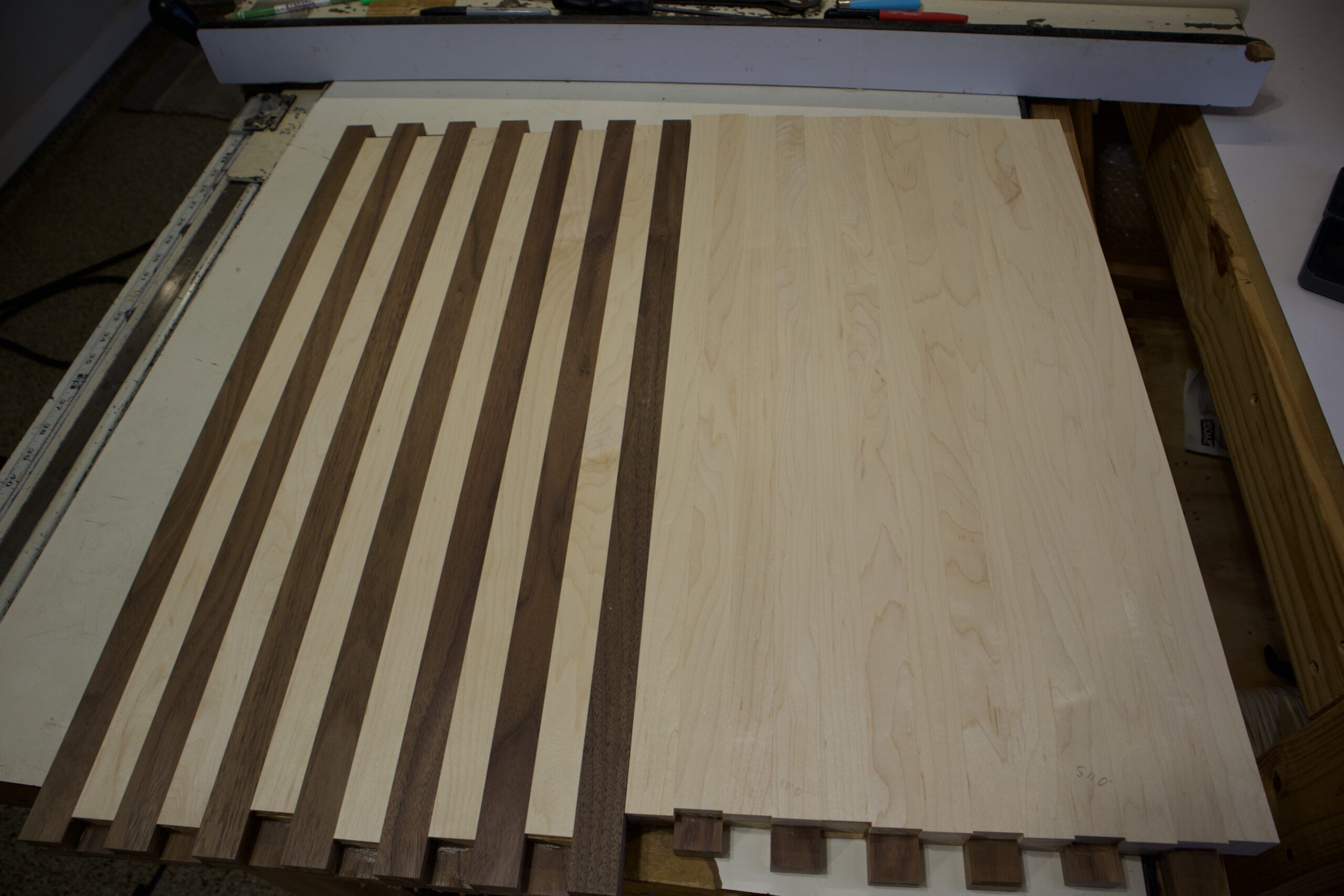
Then I cross-cut the panels into strips, assembled the board and voilà!
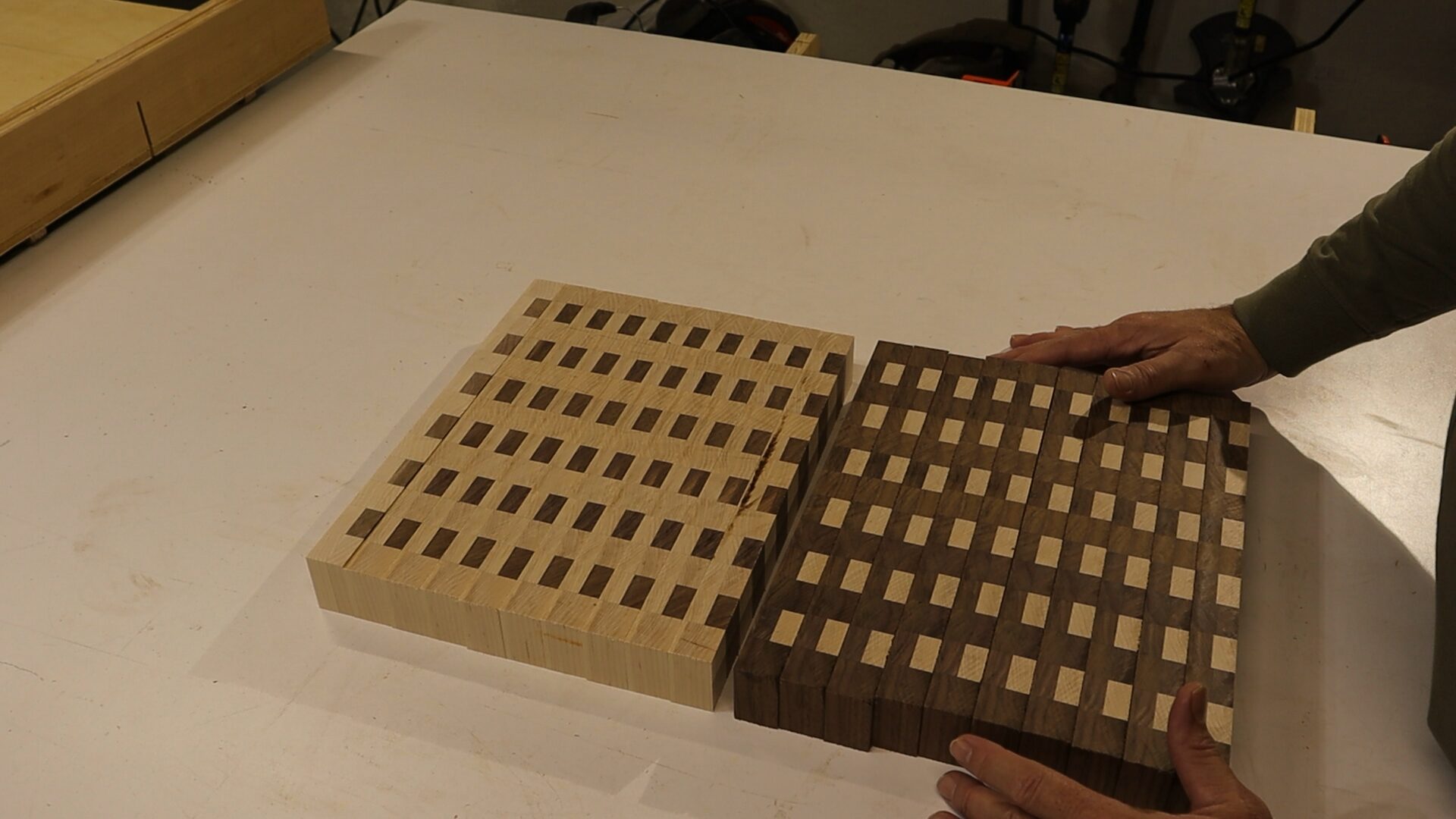
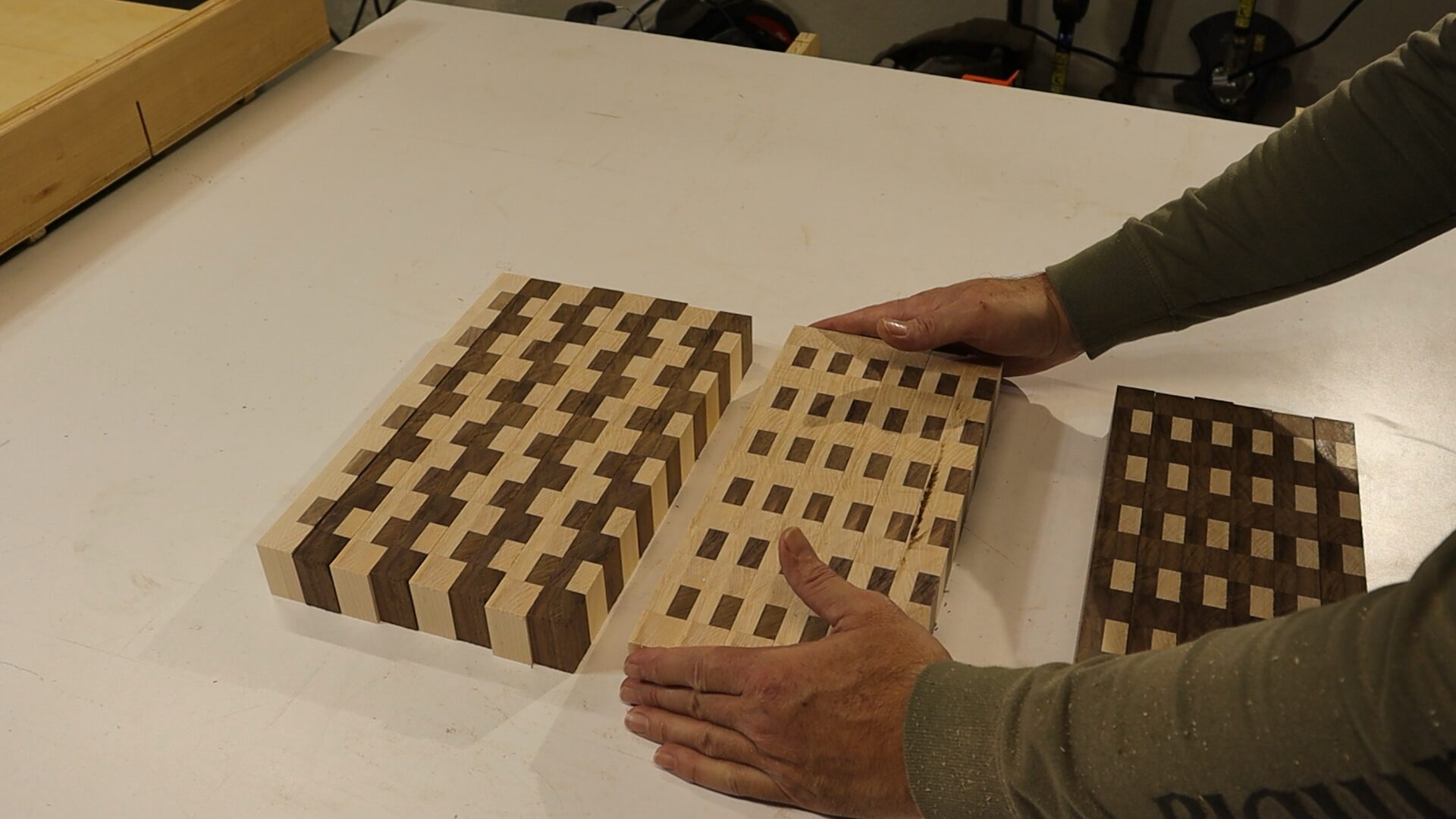
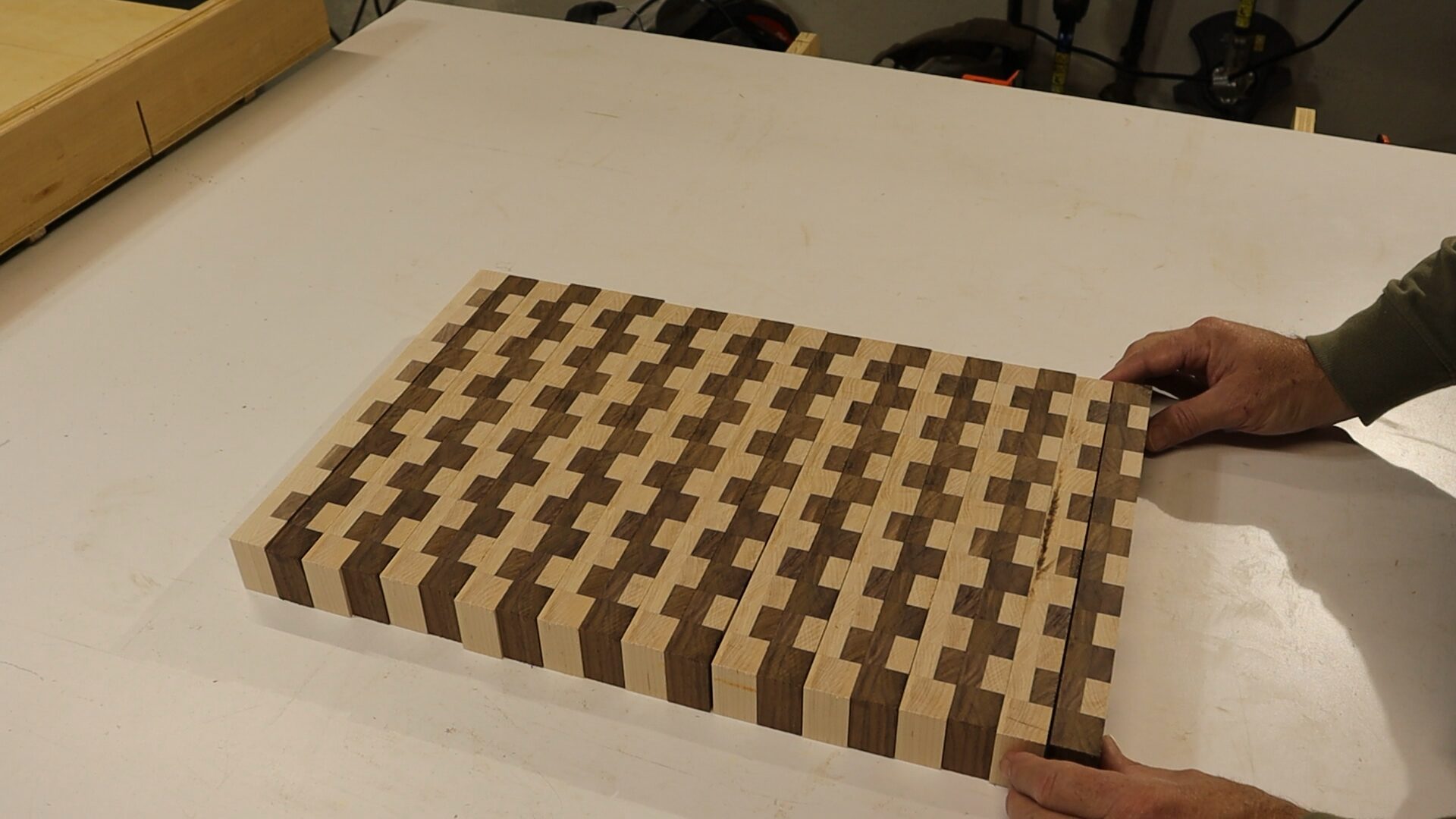
This project was so satisfying to bring to life! I'm even more encouraged when inspiration strikes unexpectedly to stretch myself and attempt to transform everyday encounters into unique creations.
I had no idea if I was going to be able to execute this pattern or not. It wasn't until I started putting the cross cut pattern strips together that I realized it was actually going to work!
I learned a lot making the “Altered Tile” cutting board. The success of this project urges me to continue learning how to translate the beauty of optical illusions through my woodworking.